


In India, summer has shaped culture in more ways than we realise. From daily rituals of local refreshing drinks to the fabrics we reach for instinctively, the heat has influenced the way we live, dress, and move through everyday life.
At the centre of this has always been the kurta. An enduring silhouette that continues to feel relevant even today, as days get hotter and comfort becomes essential. Long before “summer dressing” became a trend, Indian wardrobes were already built around survival. Breathable cottons, softer silhouettes, and clothes designed for long afternoons and rising temperatures became part of our visual language over generations.

For Chapter 5 of Kurta Reframe, we wanted to look at the Indian summer not as a backdrop, but as a part of the kurta itself. The chapter draws from familiar seasonal rituals deeply woven into memory. The slowing down of afternoons, the search for shade, the comfort of loose silhouettes, and the small pauses marked by local summer drinks that have always been part of surviving the heat.
Revisiting India’s Iconic “Garmi” Advertisements
The team began by revisiting old Indian advertisements. Across decades of print campaigns, television commercials, and hand-painted visuals, countless products were sold as solutions to the heat. From cold beverages and talcum powders to coolers, fans, sharbat, and sugarcane juice, “garmi” was always at the centre of the narrative. Not summer in an abstract sense, but garmi in the way Indians experience it. Immediate, physical, nostalgic, and deeply familiar.

This became the starting point for understanding the kurta within the context of the Indian summer. Much like these products were designed as responses to heat, the kurta too emerged from practicality and adaptation. Lightweight fabrics, relaxed silhouettes, softness, breathability, and ease of movement became essential to the way Indian clothing evolved over generations. Long before functionality became part of fashion conversations globally, the kurta had already perfected the balance between comfort, climate, and everyday wearability.
Revisiting these advertisements allowed us to see “garmi” not simply as a season, but as something that has shaped Indian visual culture, behaviour, and dressing habits for decades. Within that landscape, the kurta naturally becomes one of India’s most enduring responses to summer itself.
Ganne Ka Juice and the Rituals of Relief

Inspired by the visual language and nostalgia of these advertisements, we approached this chapter as a study of how Indians have always adapted to heat. In the campaign, the model is seen making ganne ka juice, one of the most recognisable rituals of the Indian summer. More than a nostalgic visual, it becomes symbolic of what the kurta represents. Practicality rooted in culture. Much like the drink itself offers relief during unforgiving heat, the kurta has long functioned as India’s sartorial response to summer.
The Silk Chanderi Kurta Set in Fuchsia Blue

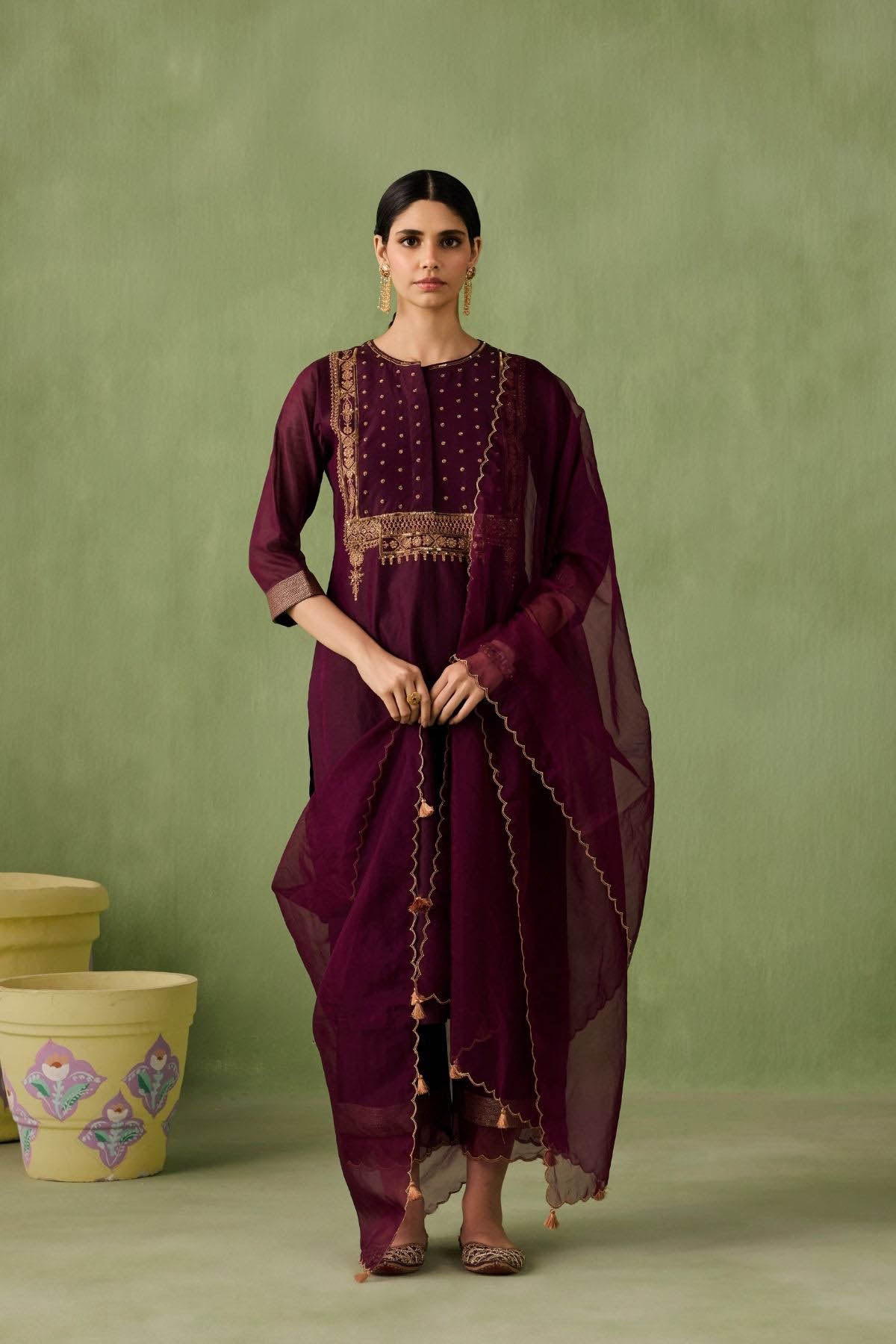
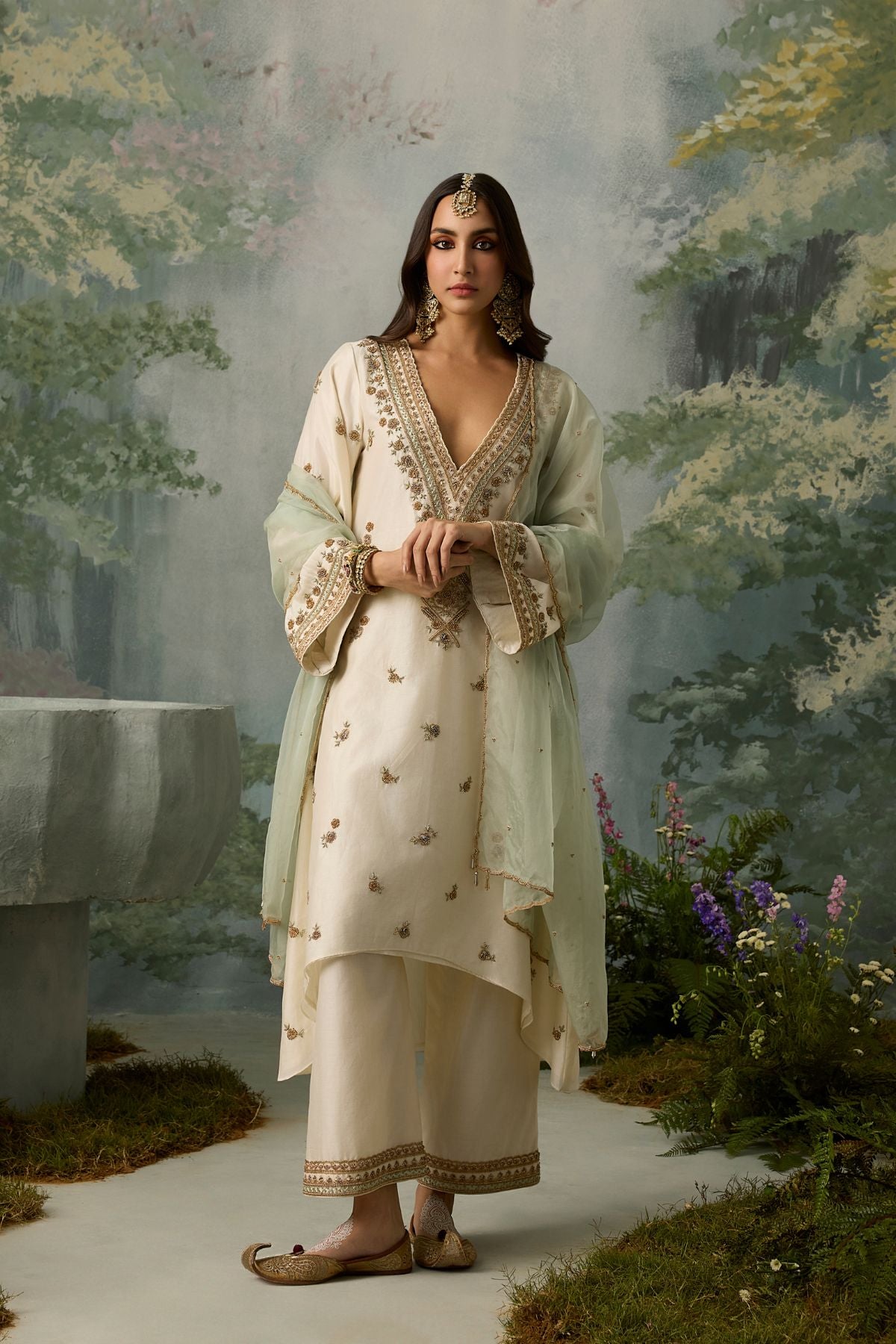
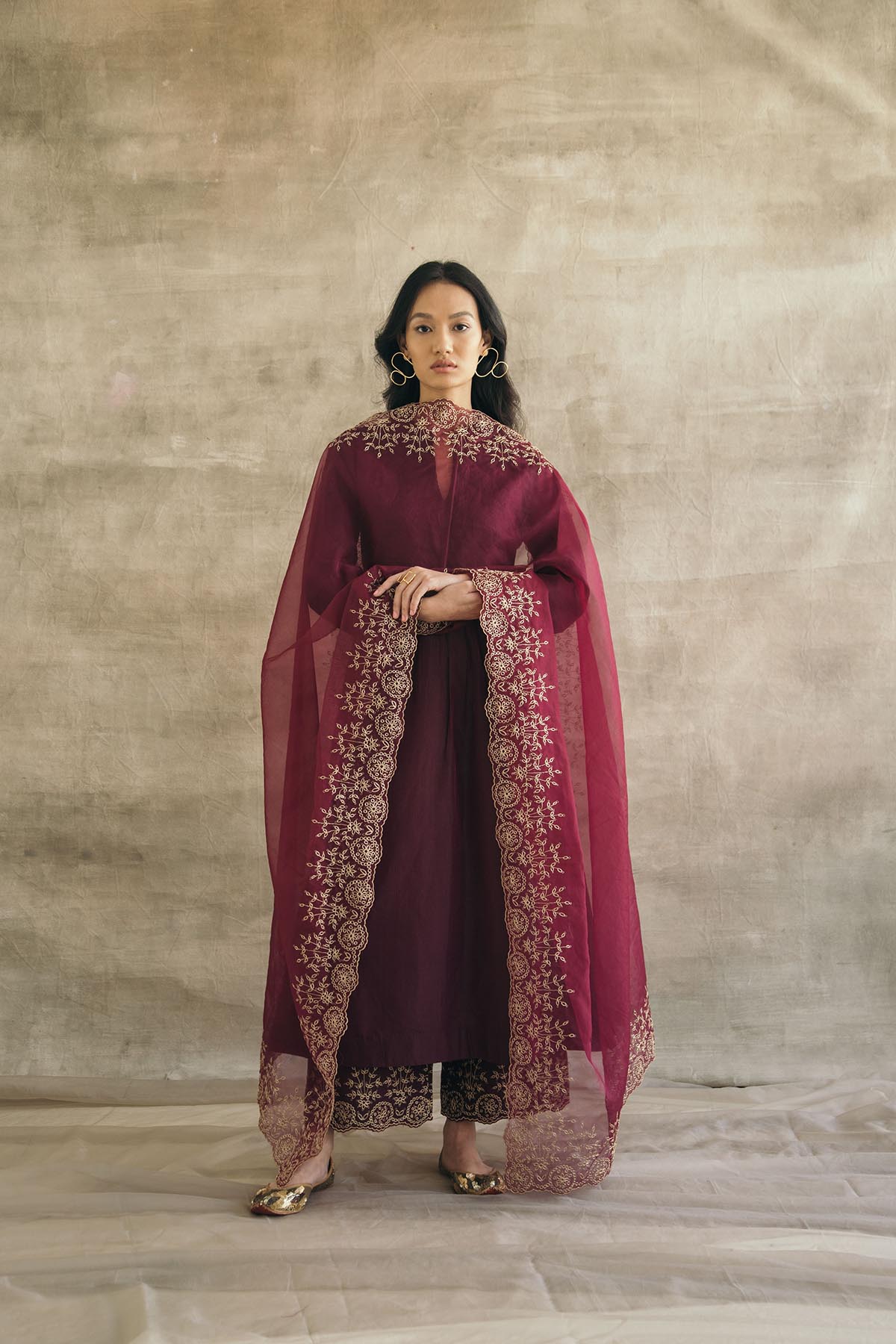
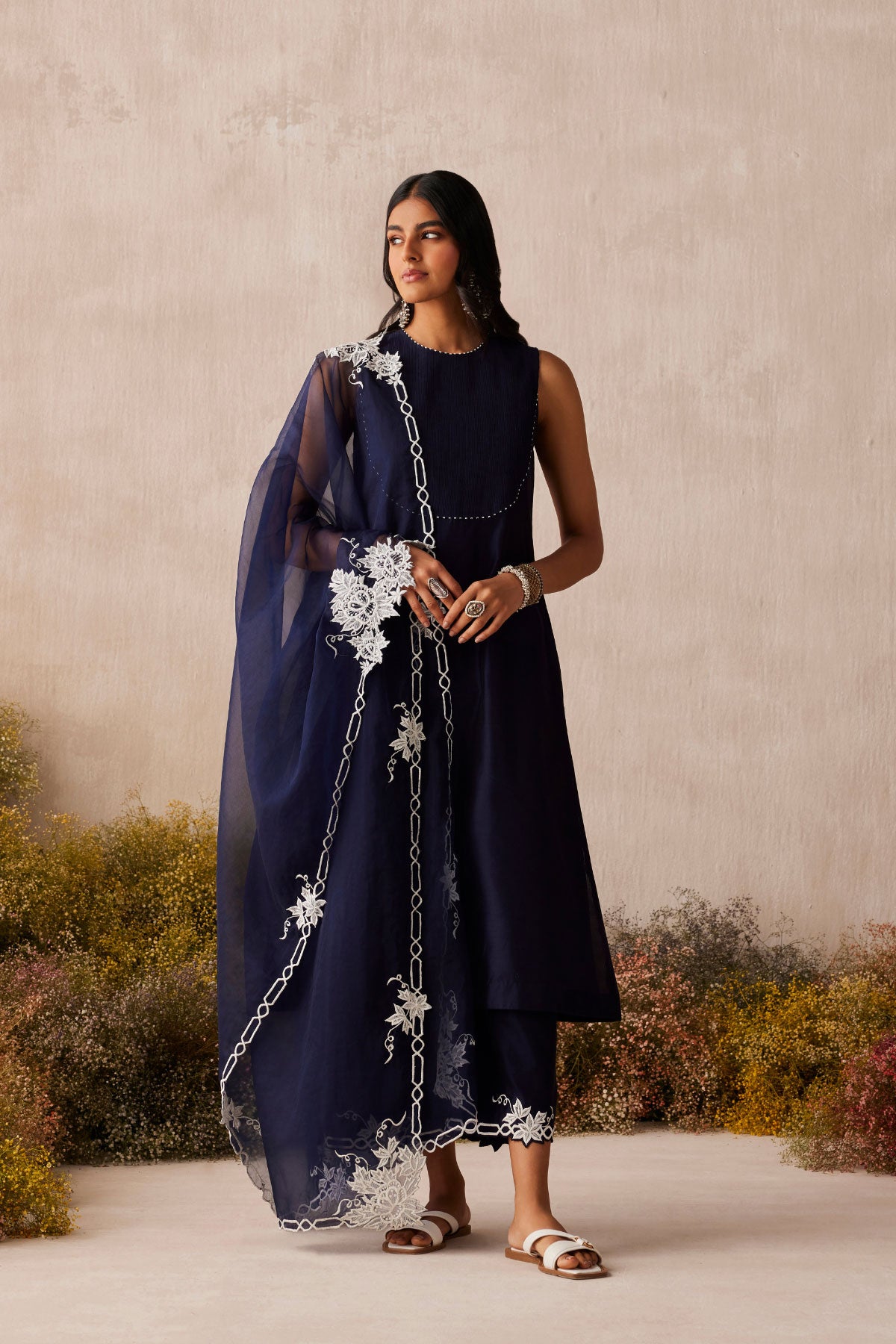
At the centre of this story is our Evening Bloom Kurta Set - a silk Chanderi kurta set in a striking fuchsia blue. Light in texture yet rich in presence, the fabric reflects the duality of the Indian summer itself. Intense, vibrant, and impossible to ignore, yet softened through movement and airiness. The fluidity of the silhouette allows ease through rising temperatures, while the sheen of silk Chanderi mirrors the way summer in India has always carried both harshness and beauty together.
The Shared Visual Language of Indian Summers
Indian summers also create a collective behaviour and visual culture that feels instantly recognisable across the country. The slowing down of afternoons, crowded juice stalls, cotton fabrics drying under sharp sunlight, people gathering around coolers and fans, steel glasses filled with nimbu paani or ganne ka juice, and the instinctive shift towards lighter clothing all become part of a shared seasonal rhythm. Over time, these rituals have shaped a collective aesthetic around garmi itself. The kurta exists naturally within this landscape, not as a styled object separated from everyday life, but as something deeply embedded within it.

The campaign’s visual language captures this familiarity through a subtle sense of surrealism. Familiar symbols of the Indian summer are reimagined with heightened colour, composition, and atmosphere, creating visuals that feel nostalgic yet slightly dreamlike. The exaggerated vibrancy, cinematic stillness, and almost theatrical treatment of everyday summer rituals transform ordinary moments into something emotionally charged, allowing the campaign to sit between memory and fantasy while still feeling unmistakably Indian.
Kurta Reframe Chapter 5: Climate, Memory, and Clothing
Kurta Reframe Chapter 5 ultimately becomes a study of how climate shapes culture, and in turn, shapes clothing. It is a reminder that the kurta has never simply been a garment. It has always been one of India’s oldest and most enduring responses to heat, carrying generations of memory, practicality, and ease within its folds.


