


There's a particular kind of person who refuses to be contained by a single title, who moves between disciplines because their curiosity simply won't sit still. Miheeka Daggubati is exactly that kind of person. An interior designer by training, a mental health advocate by conviction, and a champion of art and culture by instinct, she has spent her career proving these worlds were never as separate as they seemed. Through Antidote Atelier, Mudita Tribe, and Art Connect, she designs homes, conversations, and spaces that all circle back to the same idea, that how something makes you feel matters more than what it looks like. In conversation, she opens up about luxury, community, identity, and the life she's quietly built along the way.
1. How would you describe yourself to someone new?
I was once told I was a bank of random facts, which felt oddly accurate. My brain has an alarming amount of space reserved for things nobody really needs to know. I'm endlessly curious, I love understanding how people think, discovering different cultures, getting lost in art, solving puzzles, and yes, I have a completely disproportionate love for pandas. I like to think I've managed to hold on to that curiosity without ever losing my inner child. The simple things still make me happiest, a Raspberry Duet, a long drive, and conversations that leave me feeling inspired and intrigued.
2. What first drew you to interior design, and how did that passion turn into Antidote Atelier?
Interior design felt like a very natural progression for me. I grew up in a family that was incredibly house-proud, where our homes were always thoughtfully put together. My grandparents and parents loved collecting antiques, sculptures, textiles, and jewellery, so I grew up surrounded by objects that all had stories of their own. What I didn't realise then was that it was never just about making a space look beautiful.
As I started studying design, I realised there was so much more to the profession than creating aesthetically pleasing spaces. It had the ability to influence how people felt, how they lived, and how they experienced their everyday lives. That was the part that fascinated me.

Image Source: Instagram
Over time, that naturally evolved into Antidote Atelier. Today, our work isn't just about designing beautiful homes but about creating spaces that feel deeply personal to the people who live in them.
3. Mental health advocacy is clearly personal to you, what inspired Mudita Tribe, and what do you wish more people understood about mental wellness?
Mudita Tribe really came out of Covid. It was the first time I remember the world collectively slowing down, and with that pause came a realisation of just how many people were struggling. We spend so much of our lives learning how to survive, but very little time learning how to truly thrive. Most of us carry our battles quietly and simply keep functioning.
I think Covid took away the distraction of living on autopilot. It made people more aware of what they were feeling and, more importantly, more open to asking for help. That shift stayed with me.
Mudita Tribe was born from that belief, that conversations around mental well-being should happen long before someone reaches breaking point.
I wish more people understood that mental wellness isn't about being happy all the time. It's about having the tools to navigate the days when you're not. Just like physical health, it's not something you should only think about when you're struggling. It's something you practice every day, long before you actually need it.

4. You run three very different ventures, Antidote Atelier, Mudita Tribe, and Art Connect. What ties them together for you, and is there a common thread you're chasing across all three?
People ask me this quite often because, on paper, they couldn't look more different. But I've never really seen them as separate ventures.
To me, they've always felt like different expressions of the same interests. I've always been fascinated by how we experience the world around us, through the spaces we inhabit, the conversations we have, and the art that moves us.
Antidote Atelier explores that through design. Mudita Tribe through mental well-being and honest conversations. Art Connect through culture and art. They're all very different mediums, but they come from the same place. I never set out to build three businesses. I simply kept following the things I genuinely cared about, and each one found its own way of taking shape.

Image Source: Instagram
5. You've spoken about luxury being less about what you own and more about how it makes you feel, how have you come to define luxury through your work and personal experiences?
I've always thought my idea of luxury was a little different from the conventional one. While the world often associates luxury with rarity or exclusivity, I've always been drawn to how something makes me feel.
For me, luxury has always been the feeling of walking into an incredibly hospitable home, where everything instantly puts you at ease. It's the warmth of being genuinely looked after, the comfort of a space that feels effortless, and the thoughtfulness behind every little detail. That's a feeling no price tag can create on its own.
I think that's naturally found its way into my work. When we design a home, we're not chasing luxury as a style, we're trying to create that feeling. Because long after you've forgotten what something cost, you always remember how it made you feel.
6. Hyderabad runs through everything you do, what does the city give you creatively that you don't think you'd find anywhere else?
What I love most about Hyderabad isn't just its history or its architecture, it's the people. To me, the soul of the city has always been its quiet acceptance of everyone. People from different faiths, cultures, communities and walks of life have lived alongside each other for generations, and somehow it's never felt like something that needed explaining. It simply is.
I think that same spirit is reflected in the city itself. Hyderabad is one of the few places where the past and the present coexist so effortlessly. You can be standing in front of a centuries-old monument one moment and, a few minutes later, find yourself surrounded by the skyline of one of India's fastest-growing business districts. Neither feels out of place.
Growing up here taught me that you don't have to choose between heritage and progress. The two can exist beautifully side by side. I think that's a way of thinking I've carried into almost everything I do.
7. How would you describe your personal style, and has it evolved alongside your life?
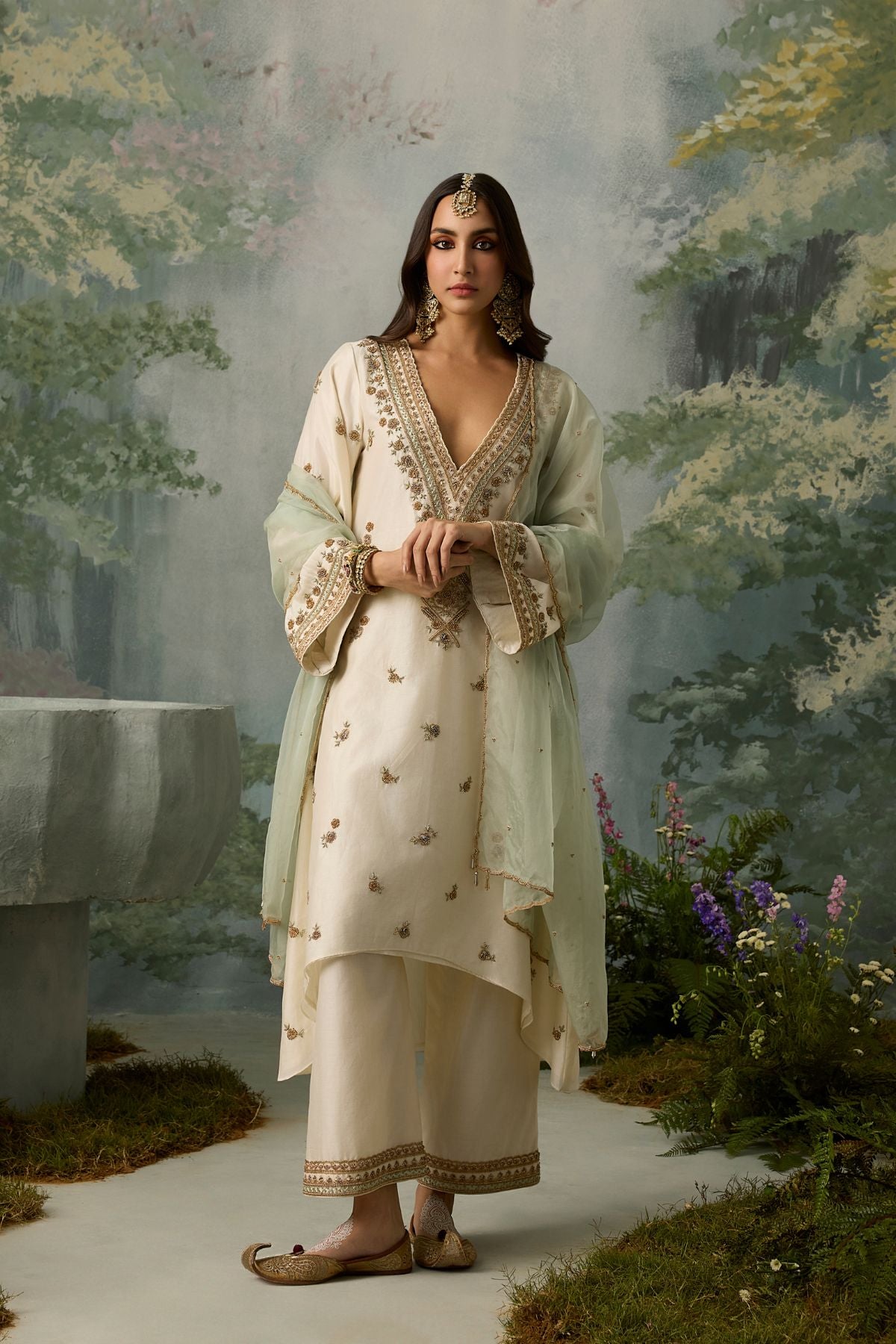
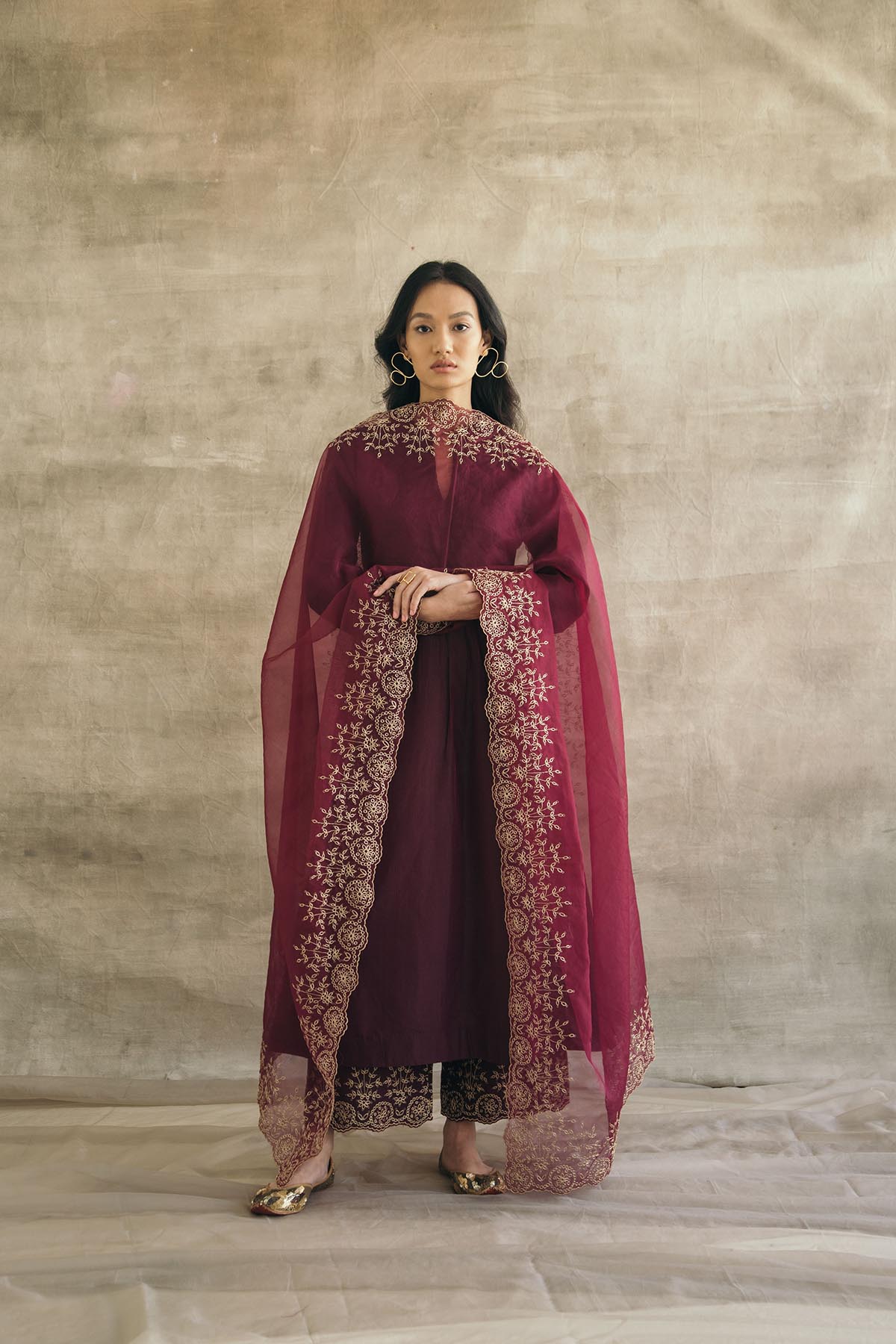
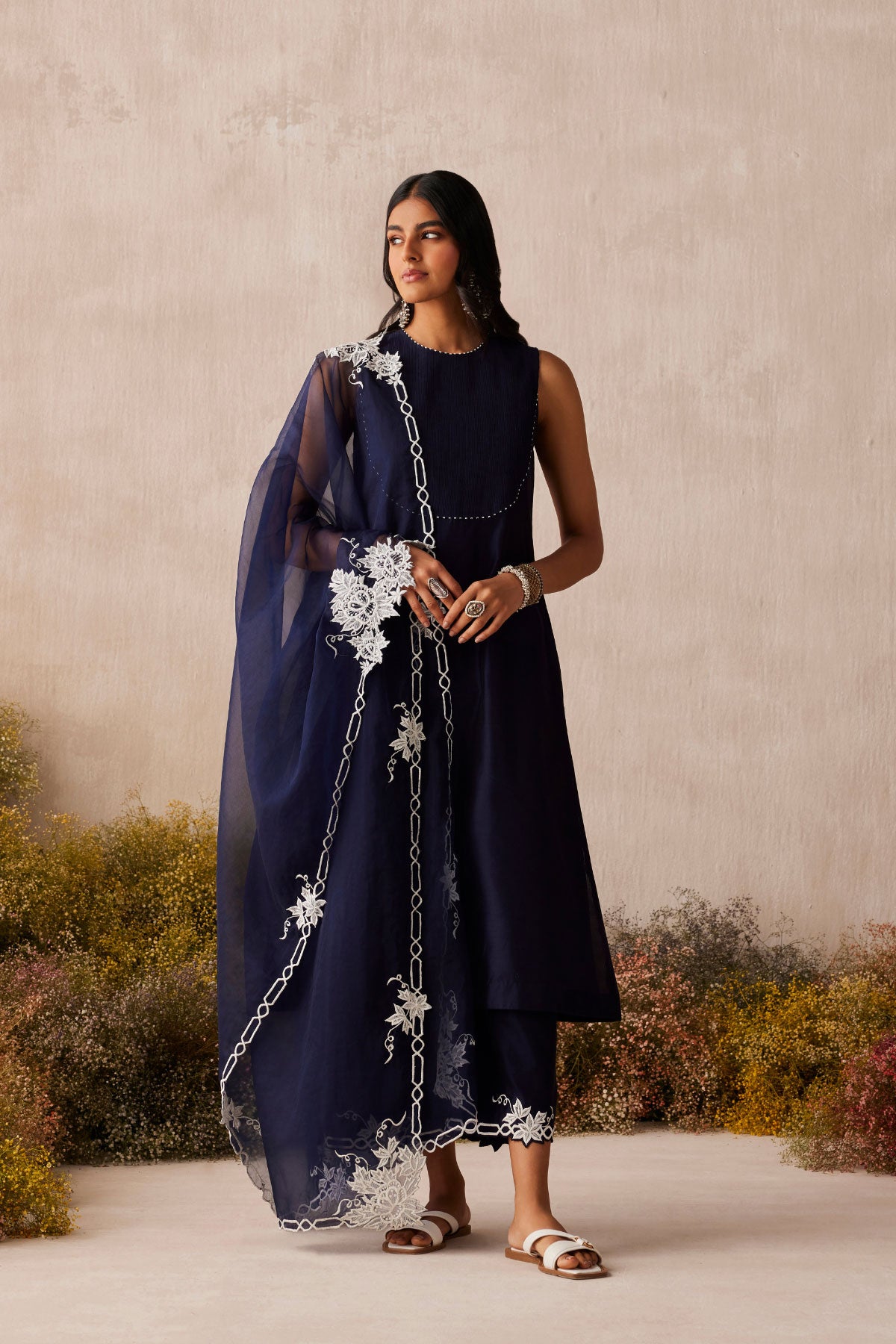
I've always been someone who's followed instinct over trends. I think, over the years, I've simply come to know myself better, and that's naturally shaped my style.
I've always been drawn to things that feel timeless and have a strong sense of character, whether it's in fashion, interiors or art. I love classical styles with a personality of their own, understated yet bold. It sounds almost paradoxical, but that's exactly what I'm drawn to.
I don't think I've ever dressed for a particular look. I dress for whatever version of myself I feel like expressing that day. That could be a beautifully structured black gown, a red patent leather jacket, or an intricately printed Venetian corset. They all feel equally like me.

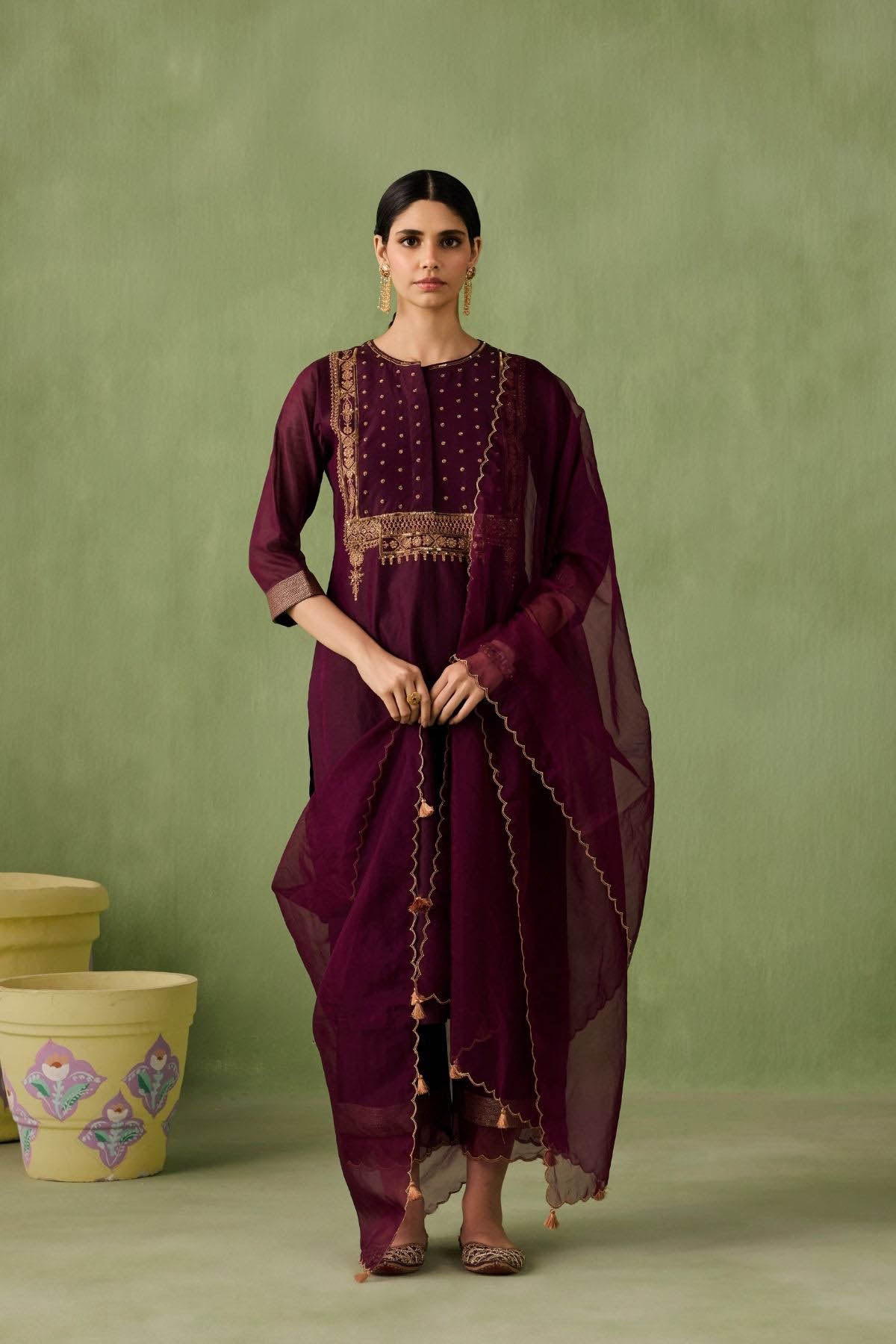
Miheeka in Mandala - Purple Kurta Set
8. You and your husband both come from creative worlds. How do you inspire and challenge each other in your respective journeys?
I think we're both creative in our own ways, but more than that, we're both endlessly curious. We get genuinely excited by discovering something new, and that's probably what we enjoy sharing most with each other. Whether it's an idea, a piece of art, AI, a story, a product or something completely random, we end up talking about just about everything.
We both have our own opinions and our own perspective, and I don't think either of us expects the other to agree all the time. In fact, it's far more interesting when we don't. Some of our best conversations have come from looking at the same thing and seeing it completely differently. We respect that about each other, and I think it's one of the things that keeps us both creatively inspired.
9. You've spoken about creating spaces that foster connection. Do you think community is an essential part of empowering women?
Absolutely. I don't think empowerment happens in isolation, no matter how much we're taught that it does. Every woman I know has got to where she is because someone believed in her, encouraged her, challenged her or simply showed up for her when she needed it.
To me, community isn't about having the biggest circle. It's about having people you can be completely honest with, celebrate your wins without comparison, and lean on without judgement. That's something I've become more aware of as I've grown older.
Whether it's through Mudita Tribe or Art Connect, I think I've always been trying to create spaces where those kinds of connections can happen naturally. The conversations are different, but the hope is always the same, that people leave feeling a little less alone than when they walked in.

10. If someone who knew you ten years ago met you today, what would surprise them the most?
I don't think anyone who knew me ten years ago would have predicted the life I'm living today, and honestly, neither would I.
Back then, I was an interior designer, and I don't think anyone would have imagined that art and mental well-being would become such a big part of my life. They were worlds that seemed completely unrelated to me at the time.
What's been interesting is watching people who've known me for years look at what I'm doing now and say, “Actually… this is exactly what you'd end up doing.” It's funny how, in retrospect, it all just makes sense.
___
For all the different forms her work takes, Miheeka Daggubati keeps returning to a single instinct — that the spaces we live in, the conversations we share, and the art that moves us are really all in pursuit of the same thing. It's a way of moving through the world that resists easy categorisation, and perhaps that is the point. What connects everything she builds isn't a title or a discipline, but a feeling: the quiet, lasting kind that stays with you long after everything else has faded.


