
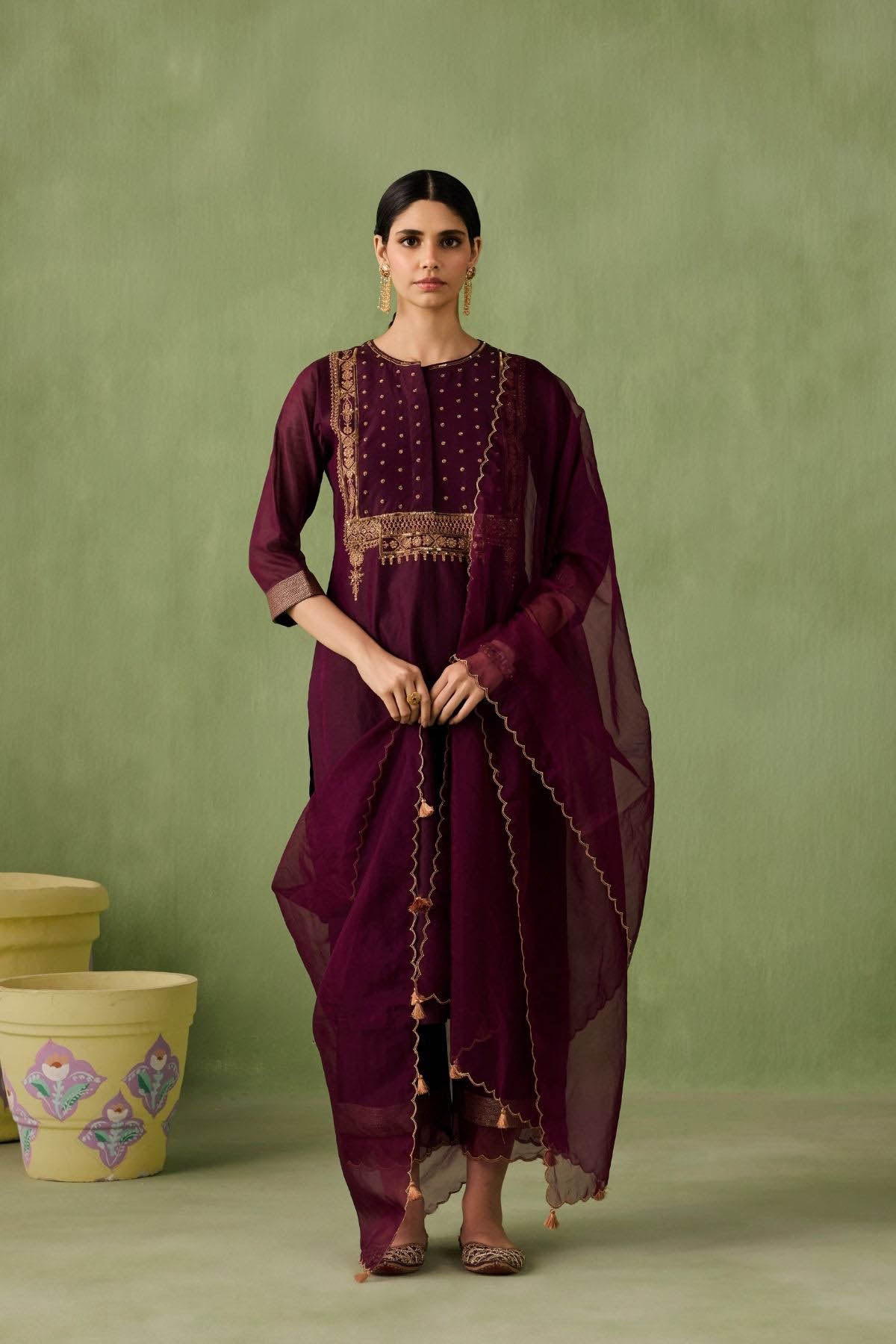
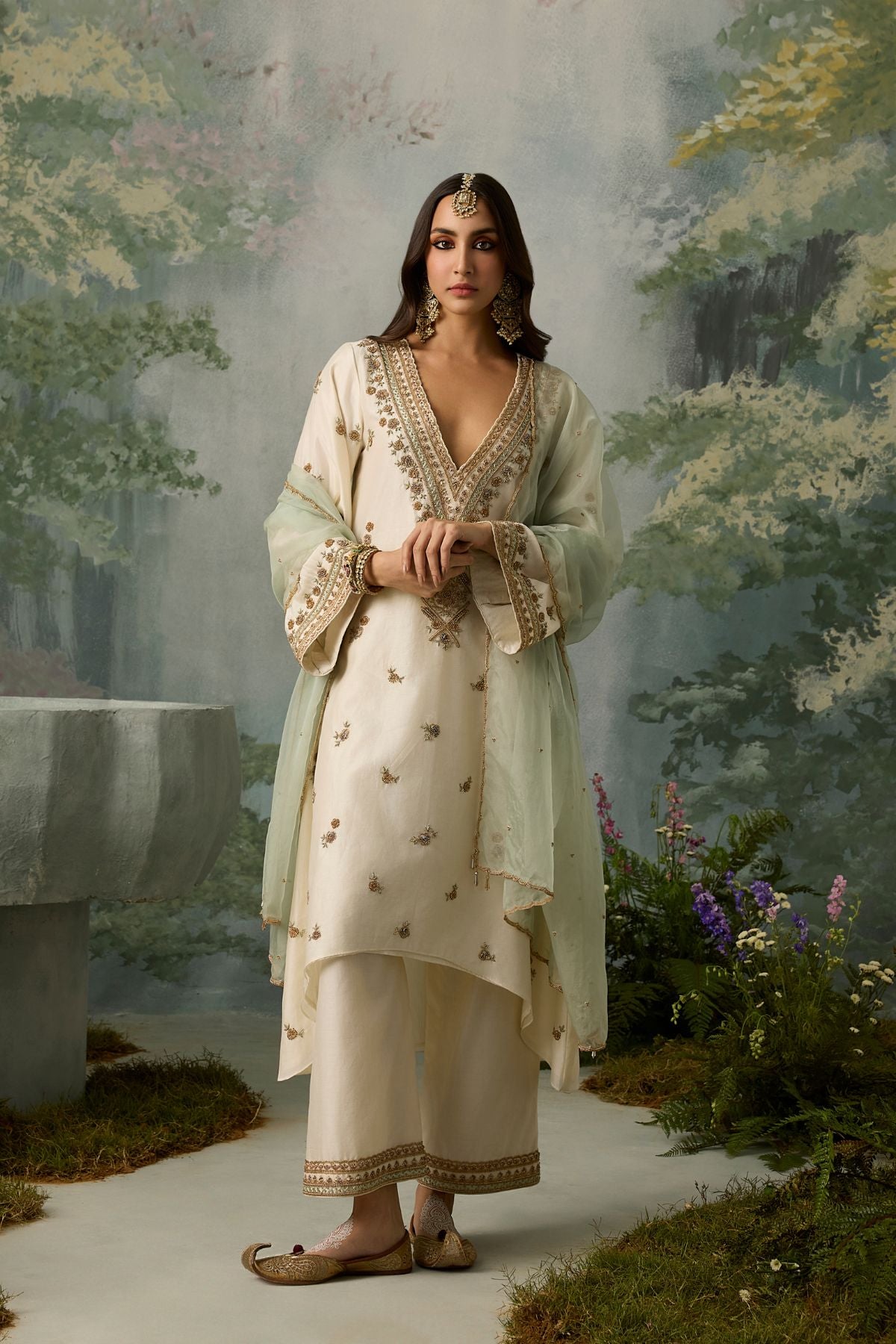
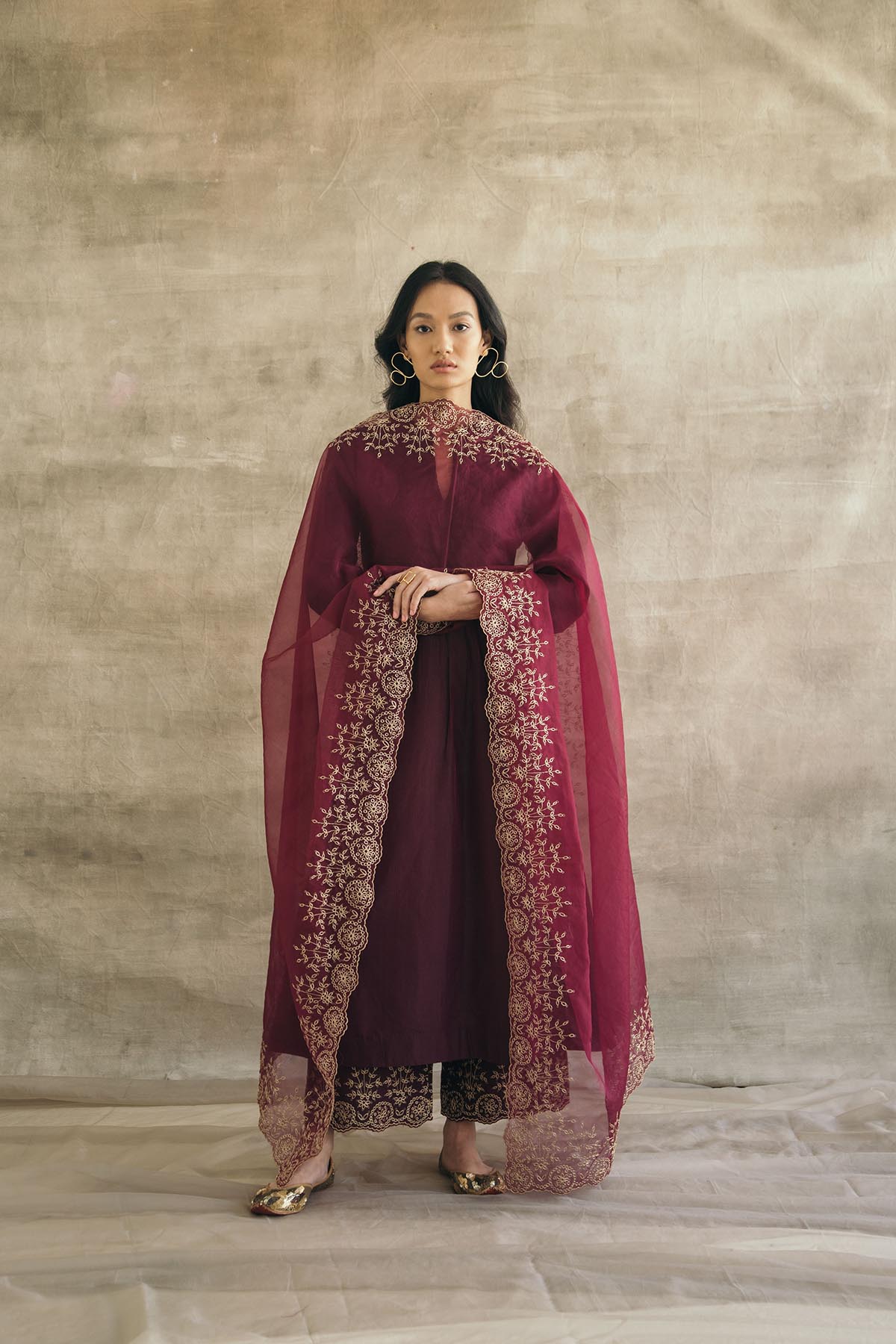
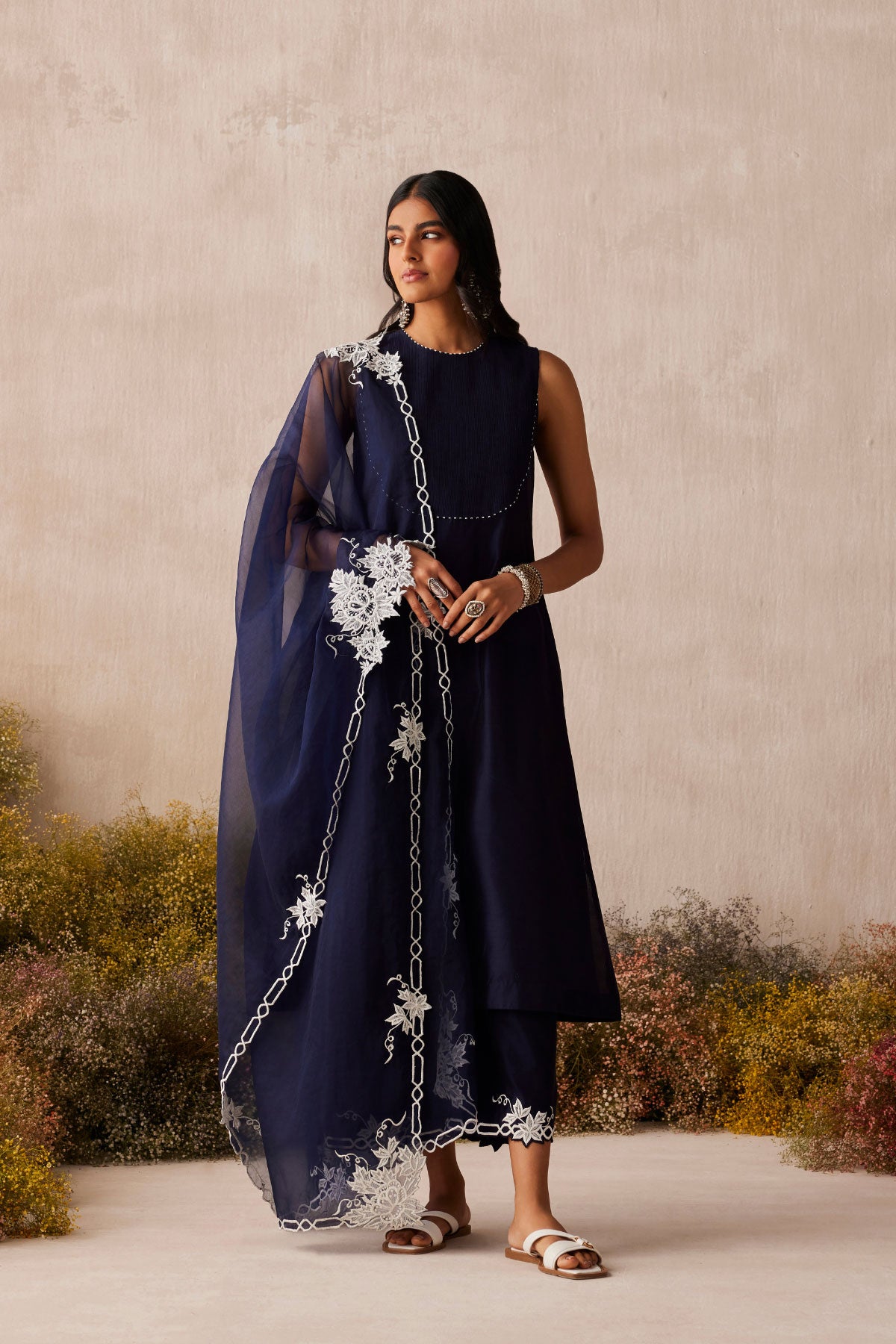


The Study Deepens
Every chapter of Kurta Reframe begins with the same commitment: to slow down enough to see what familiarity has made invisible. To return to the kurta and the world surrounding it with deliberate attention. Chapter 4 honours that same commitment. Except this time, what demands our gaze is not the kurta itself. It is what moves with it.

The dupatta enters. And everything changes.
Not an Accessory. A Presence.
Fashion has long filed the dupatta into the category of accessory. A finishing touch. A companion cloth. Something that completes the look and then stays in its place.
Chapter 4 refuses this entirely.

A presence is not added. It arrives. It occupies space and shifts the atmosphere of everything around it. The dupatta, studied closely, does exactly this. It is not decoration. It is not an afterthought. It is a force that enters the frame and changes it.
What the Body Remembers
There is something instinctive in the way a dupatta falls. The way it gathers at the shoulder, slips from an arm mid-gesture, or settles after movement feels recalled rather than accidental. A dupatta worn long enough carries the history of the body that wore it. It holds memory in its folds, the way certain fabrics hold warmth long after the sun has left them.
It is not decorative. It is an archive.
Like Water, Never Fixed
What drew us most to the dupatta was its resistance to stillness. Clothes can be folded, pinned, pressed into submission. The dupatta resists this. It is always in a state of becoming. Like water, it takes the shape of its wearer, shifting with breath, with gesture, with the particular rhythm of how a person occupies their own body.
No two wearers carry it the same way. And that, in itself, is a kind of language.

Guided or Leading?
At times the dupatta feels guided, obedient to gesture, trailing the body's decisions. At times it feels like it leads, lifting before the movement fully arrives, settling in a way that recomposes the entire silhouette. There is an agency in its behaviour that unsettles the idea of cloth as passive material.
We found ourselves watching it rather than directing it. And we think that is exactly the point.
Cloth as Character
When the dupatta is no longer seen as something worn, something shifts. It begins to feel like it chooses how to stay, moving with the body, holding its gestures, tracing its pauses.
At its core, drape becomes a study of relationships. Between garment and wearer, between stillness and motion, between what is worn and what becomes an extension over time.

Here, cloth becomes character. And the dupatta, in its refusal to be fixed, is never just cloth.
It is memory, made wearable.


