
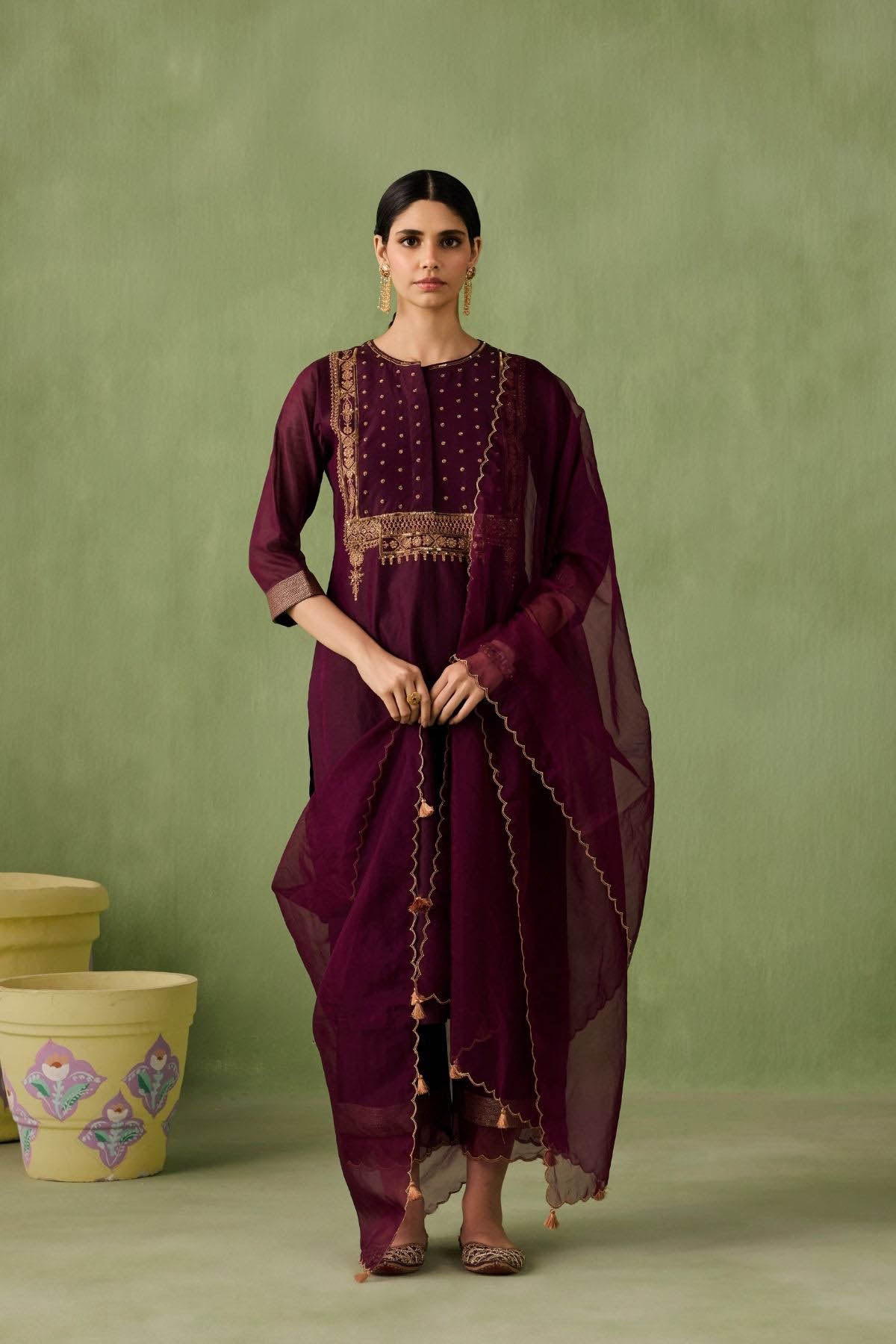
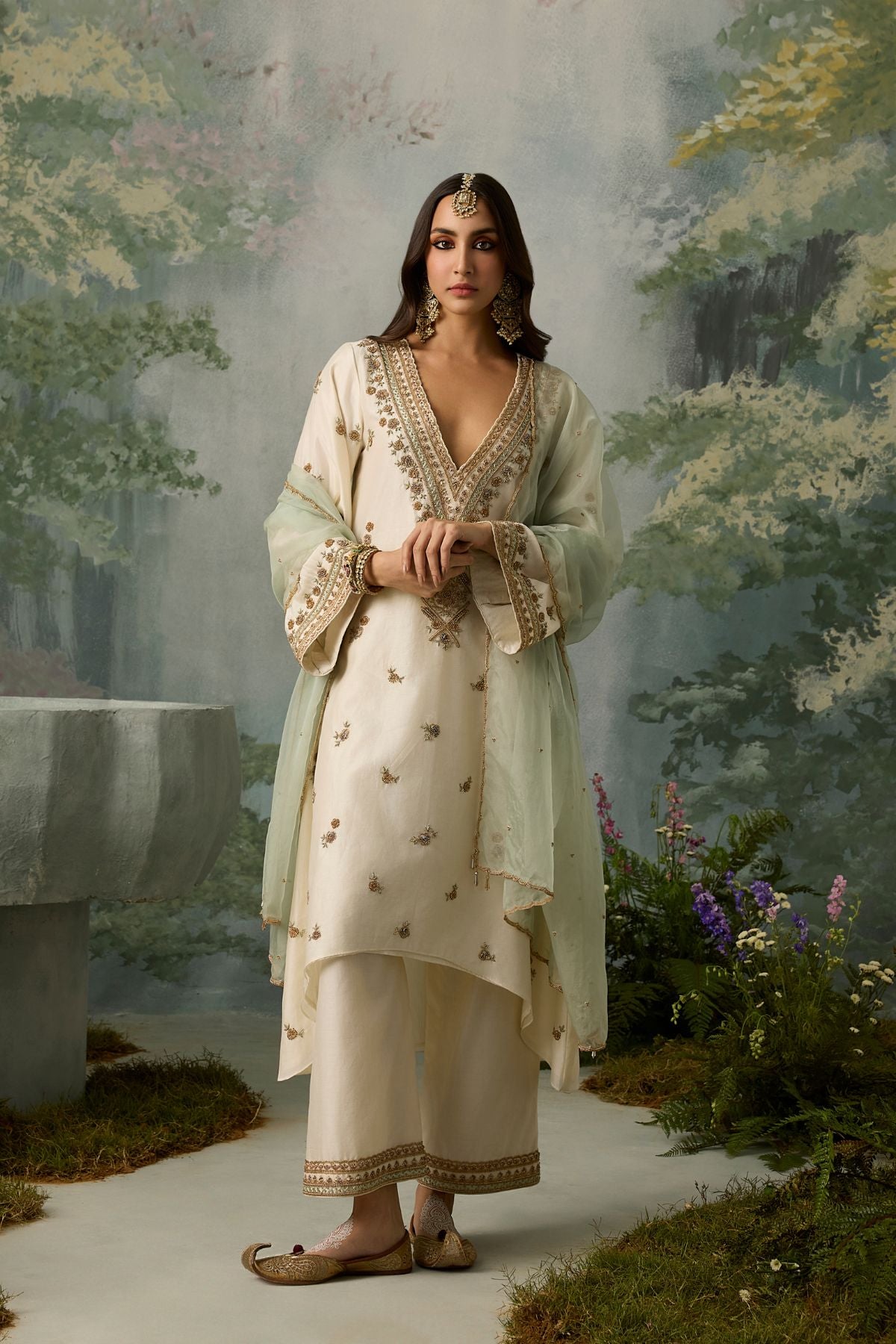
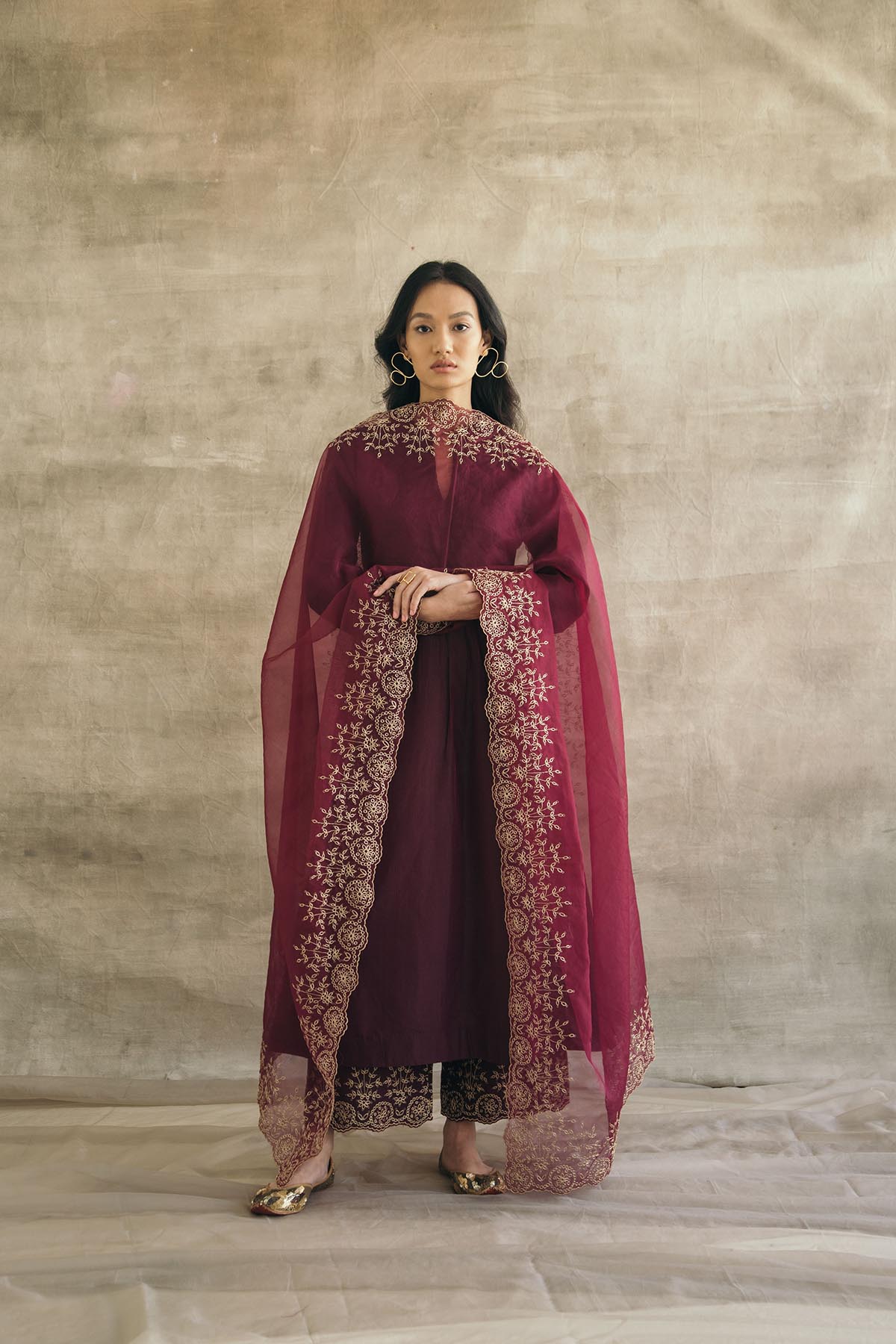
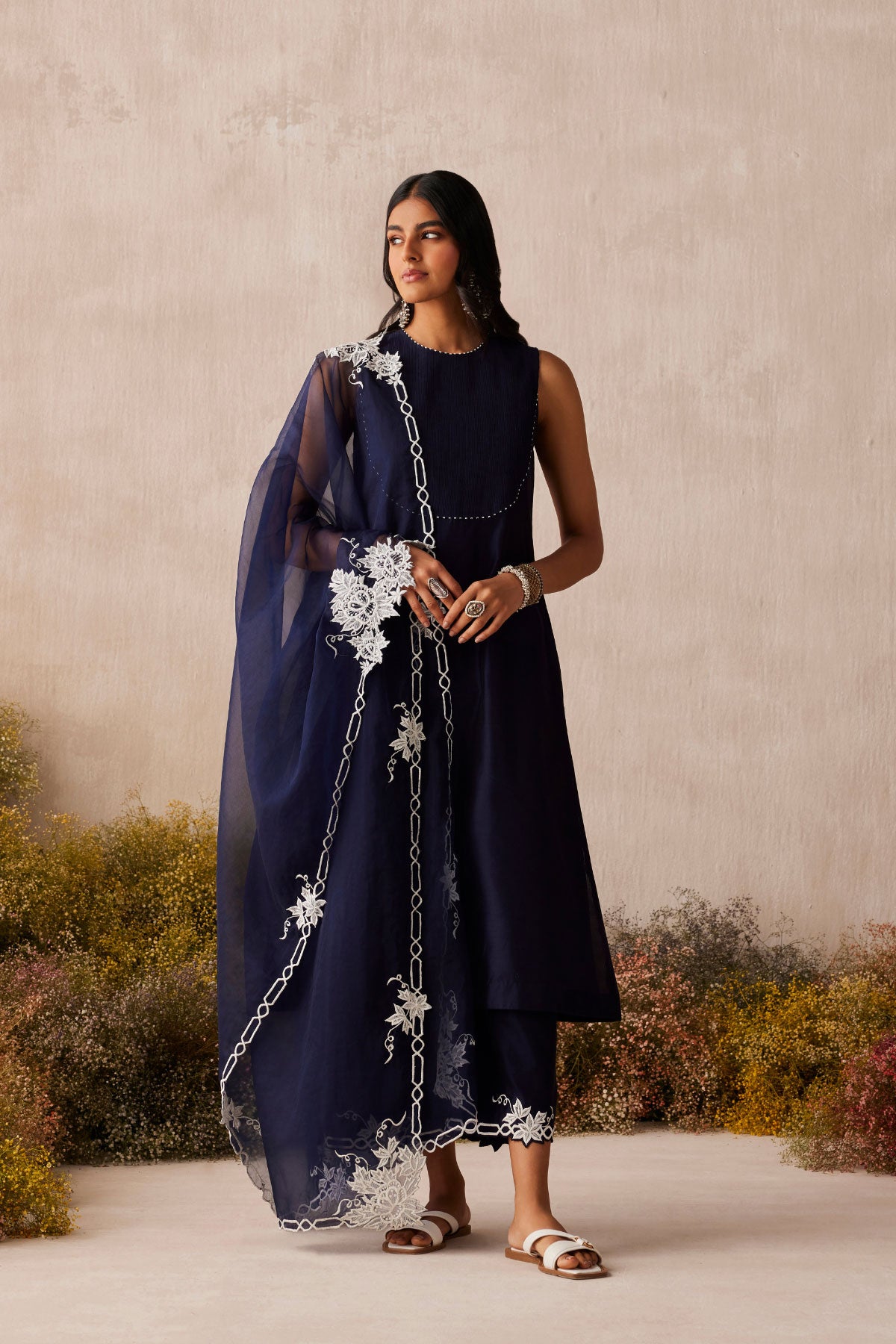


Returning to the Kurta
In our series Kurta Reframe, we return to the kurta as a cultural artefact shaped by time, movement, and lived experience. Long reduced to habit, the garment is looked at again with care and curiosity.

In the second chapter of the series, we examine the kurta’s long history of cultural exchange to understand why it continues to shape global fashion today.
The kurta is often understood as a constant—familiar, inherited, unchanged. Yet its history tells a more fluid story. One shaped not by stillness, but by adaptation. By people responding to the realities of their lives, and by a garment flexible enough to move with them.
Women, Public Life, and Adaptation

At the turn of the late nineteenth and early twentieth centuries, Indian women were increasingly visible in public life. Courtesans, performers, and early public figures navigated new social spaces that demanded mobility, presence, and ease. Their clothing had to evolve accordingly.
Rather than abandoning the kurta, these women adapted it. They paired it with elements drawn from European and modern dress—heeled footwear, structured underlayers, and shifts in proportion. These choices were not about imitation, but practicality. Clothing became a way to negotiate public life, movement, and changing social roles.

One of the most documented examples is Gauhar Jaan, one of the earliest Indian recording artists and a widely photographed public figure of her time. Archival images show her wearing the kurta styled with heeled footwear—a deliberate choice that placed the garment within a modern visual language. Her styling decisions make clear that the kurta was already being treated as contemporary fashion, not static tradition.
A Silhouette Reimagined
It is this moment of adaptation—often overlooked—that anchors Kurta Reframe: Chapter 2.

Here, the Noorani Angrakha becomes a point of study. The silhouette is reimagined alongside elements historically associated with European dress: a corset and panniers. These are not decorative additions, nor are they intended as costume. Both were conceptualised and constructed in-house as structural studies, designed to explore how form and proportion influence the way a garment is worn and perceived.
The corset introduces structure and posture, subtly changing how the kurta rests on the body. The panniers extend volume, shifting proportion and altering how the silhouette occupies space. Together, they reshape the relationship between garment, body, and movement—without overpowering the kurta itself.
Styling as Historical Framing

In this context, styling functions as historical framing rather than embellishment. It reflects a time when women actively modified what they wore to suit their lives—adding, adjusting, and reshaping garments in response to changing environments. What emerges is a dialogue across time. One that places the kurta within a long continuum of exchange, showing how it has absorbed influence while retaining its own identity.
A History in Motion
Seen through this lens, the kurta’s presence in global fashion today feels less like a trend and more like a continuation. Its adaptability has always been central to its design and use. The silhouette has moved across contexts, cultures, and moments in history, shaped by the needs of those who wore it.

Chapter 2 does not attempt to modernise the kurta. Instead, it makes visible what has always been true: that the kurta has never been fixed. It has evolved quietly, shaped by movement and exchange—ready, again and again, to meet the world around it.


